
What is executive coaching?
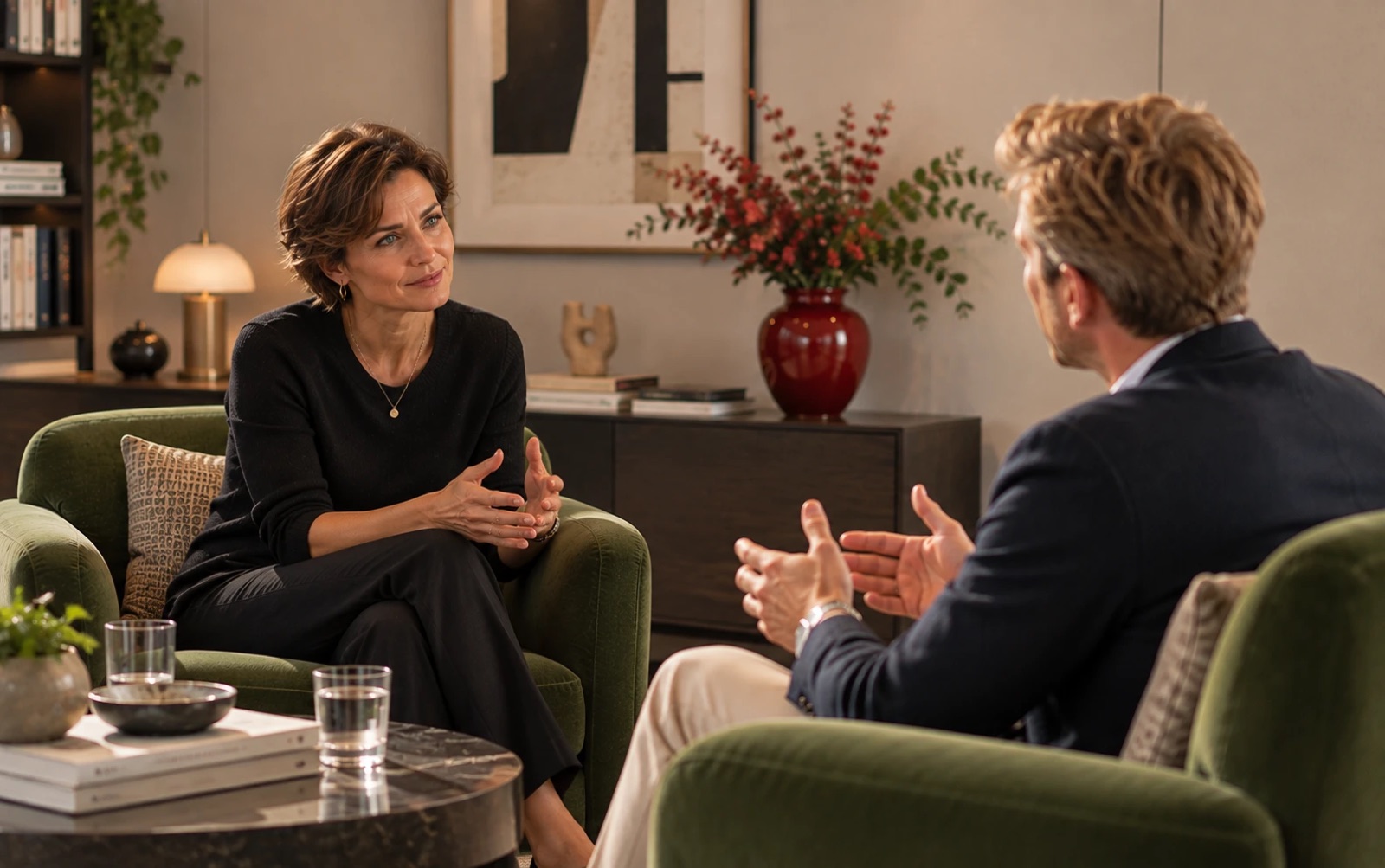
Executive coaching is one-to-one, confidential work that accompanies an executive in thinking through their own agenda. The person being coached brings the agenda; the coach listens and asks questions. The aim is for the executive to clarify their own thinking and identify steps that are meaningful to them.
Work that looks beyond the job
Executive coaching often begins with a work topic: a new role, a difficult decision, a situation with a team, the next step in a career.
But as the sessions progress, something often becomes clear: working life does not stand apart from the rest of life. Behind a career decision there are family, the city one lives in and one’s values. Behind a leadership style, who that person is and what they care about. Where energy goes in a busy period affects life both at work and outside it.
That is why executive coaching takes a holistic view of life. The International Coaching Federation’s (ICF) definition of coaching also refers to personal and professional potential together.
Taking a holistic view does not mean every topic is discussed in depth. The focus remains the goal set by the person being coached. But that goal is seen as part of the person’s life.
How does the process work?
Every process begins with an introductory call. In this call, the person describes their needs, and we decide together whether working together is the right fit.
Once we decide to work together, the goals and the number, frequency and format of sessions are agreed together. Sessions last about an hour and can take place in person or online.
If the organisation has initiated the process, shared goals are set at the start with the executive, their line manager and a representative of the organisation; at the end, the outcomes are reviewed together. The content of the one-to-one sessions remains confidential. For details: Coaching for organisations.
Who is it for?
Executive coaching is often valuable in a period of transition: moving into a new role or a larger responsibility, starting a new assignment abroad, standing on the threshold of an important career decision. Sometimes, too, there is no particular problem, just a need for a space to think.
I know from my years in leadership how hard this can be. Urgent matters crowd in among the important ones; family matters and running after the children sometimes join the daily flow of leading a team. And sometimes external factors beyond our control come into play, such as what is happening in the country we live in. In such periods, we cannot make time for ourselves; we don’t get the chance to review our plans and what we want to do. Yet setting aside just one hour for yourself, to think and to imagine the next step, is truly valuable.
In short, executive coaching looks for answers not outside, but within the executive. It gives you space to see your work, your leadership and your life not as separate pieces, but as a whole.
Sources
- ICF, definition of coaching: coachingfederation.org/about
To talk about executive coaching, we can begin with an introductory call.
Request an introductory call